
Top Helicopter Charter Experiences in America: A Procurement Guide
The utilization of rotor-wing aircraft for premium travel and high-stakes logistical missions represents a distinct operational category within the broader aviation landscape. Unlike fixed-wing travel, which is largely defined by airport-to-airport transit, helicopter operations offer the unique advantage of point-to-point agility, effectively bypassing traditional infrastructure constraints. For corporate leaders, high-net-worth travelers, and institutional planners, this capability is not merely a convenience; it is a strategic instrument for optimizing mobility in environments where time-to-destination is the primary success metric.
Yet, the market for these services is characterized by extreme fragmentation and varying regulatory standards. The distinction between a local “tour” operation and a professional-grade executive charter service is often obscured by polished branding and aspirational imagery. Achieving a reliable outcome requires a fundamental shift from viewing the helicopter as a luxury asset to understanding it as a sophisticated, mission-specific tool. This necessitates a rigorous approach to vetting, focusing on the operator’s safety culture, maintenance discipline, and operational depth.
This pillar article provides an analytical framework for identifying and managing the top helicopter charter experiences in america. It is designed for those who recognize that the quality of their travel program is defined by the technical integrity of the operation.
Understanding “top helicopter charter experiences in america”
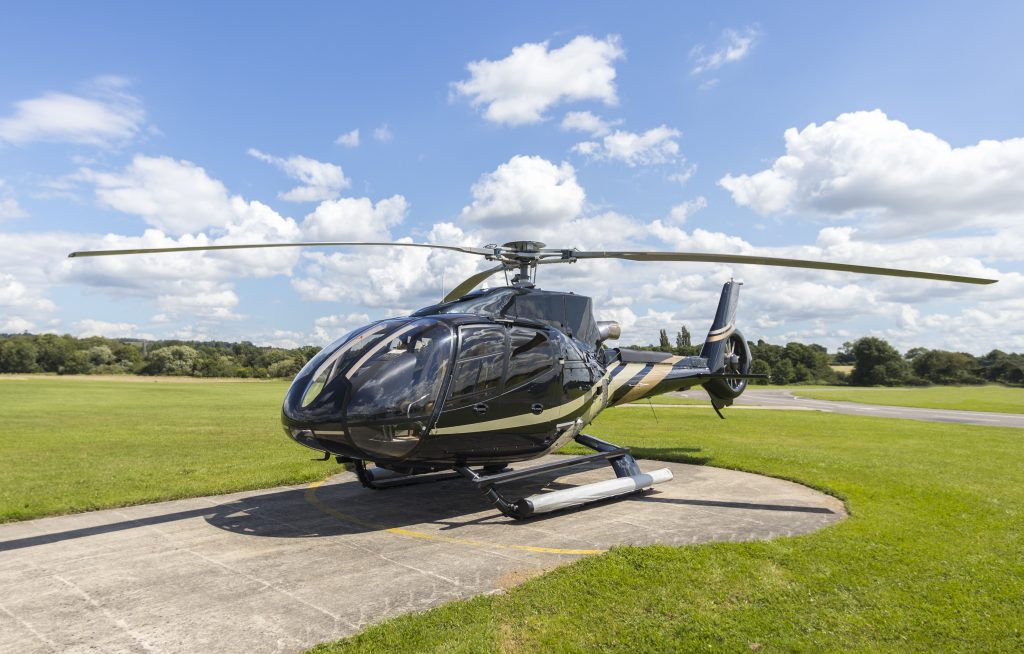
Identifying the top helicopter charter experiences in america requires moving beyond the allure of sightseeing and into the mechanics of professional flight operations. A fundamental misunderstanding persists: the assumption that any operator holding an Air Operator Certificate (AOC) provides a consistent level of service. In reality, the difference between a regional tour provider and an executive-charter firm is significant. The former operates primarily in high-volume, low-complexity environments, often under exemptions that allow for less stringent regulatory oversight than the latter.
Oversimplification in this sector presents substantial risk.. The most resilient charter experiences are those where the operator has invested in robust Safety Management Systems (SMS), consistent crew training programs, and specialized maintenance facilities.
To properly navigate this landscape, one must focus on “mission-fit.” Are you chartering for a high-intensity corporate retreat, a sensitive film production, or a time-critical executive transport? Each mission requires a different aircraft configuration and, more importantly, a different level of operational redundancy. Those who attempt to identify the top helicopter charter experiences in america without auditing the operator’s history of performing that specific type of mission often leave their travel program vulnerable to avoidable disruptions.
The Historical Evolution of Rotor-Wing Logistics
The development of rotor-wing aviation in the United States has evolved from its mid-20th-century roots—primarily in military and light-utility applications—into a sophisticated, high-demand segment of the private aviation market. Initially, helicopters were largely viewed as niche tools for remote access. As the complexity of modern business increased, so did the demand for the agility that only vertical takeoff and landing (VTOL) capability could provide.
This growth has necessitated a shift in the regulatory and operational environment. We have seen a steady move toward higher safety standards, with increasing pressure from both the public and lawmakers to bring more rotor-wing operations under the stricter regulations typically reserved for commercial airliners. This era of transformation means that the “best” operators are those who have proactively anticipated these changes by adopting advanced safety technology, such as terrain awareness systems and flight data recorders, well in advance of any regulatory mandate.
Conceptual Frameworks and Mental Models
To effectively manage helicopter procurement, planners should adopt frameworks that prioritize long-term operational health over immediate convenience.
-
The Utility-Safety Matrix: This model evaluates operators not on their “luxury” marketing, but on their ability to demonstrate safety-culture maturity—specifically, the depth of their pilot-training programs and the redundancy of their maintenance logs.
-
The Mission-Specific Redundancy Model: Recognizing that mechanical failure is a reality, this model mandates that for high-stakes missions, the planner confirms the operator has an actionable recovery plan, including a pre-verified backup asset.
-
The Infrastructure Integration Audit: This framework assesses whether the operator has established landing rights and protocols for the specific departure and destination points, acknowledging that “landing anywhere” is a common myth that complicates logistical planning.
Key Categories and Operational Variations
The industry categorizes charter services based on the complexity and mission-profile of the flight.
| Charter Category | Primary Characteristic | Ideal Use Case | Strategic Trade-off |
| Light Executive | High agility, compact cabin | Rapid urban transit, site visits | Low cargo capacity |
| Twin-Engine VIP | High safety redundancy | Multi-passenger, complex route | Higher hourly cost |
| Specialized Utility | Heavy lift, mission-specific | Filming, logistics, construction | Reduced comfort |
Choosing the right category is essential for managing both cost and risk. Selecting a light helicopter for a multi-passenger, night-time executive mission across a dense metropolitan area is a fundamental logistical error.
Detailed Real-World Scenarios
Scenario 1: The Multi-Leg Executive Roadshow
An executive team needs to visit three separate locations in a single day, avoiding major traffic bottlenecks.
-
Decision Point: Chartering a twin-engine aircraft for enhanced reliability and night-flight capabilities.
-
Failure Mode: The landing site for the third location is not fully vetted for night-time operation, leading to a late-day cancellation. The second-order effect is the loss of a major business opportunity.
Scenario 2: High-Value Media Production
A film crew needs to capture high-definition footage in a restricted airspace.
-
Decision Point: Partnering with an operator that holds pre-existing flight permits and has experienced pilots for precision aerial photography.
-
Failure Mode: The operator is inexperienced with federal filming regulations, leading to permit delays and crew downtime.
Planning, Cost, and Resource Dynamics
The economic management of rotor-wing charter requires granular awareness of the factors that impact the final invoice.
| Cost Variable | Impact Level | Mitigation Strategy |
| Positioning (Ferry) Fees | High | Prioritize operators based at key regional hubs |
| Wait-Time Fees | Moderate | Consolidate legs to minimize idle time |
| Specialized Permits | Variable | Retain local specialists for flight planning |
| Maintenance Overheads | Low (Internalized) | Choose providers with dedicated, on-site maintenance |
Effective planners treat these variables as dynamic levers that can be adjusted to balance fiscal efficiency with the requirement for mission success.
Tools, Strategies, and Support Systems
-
Standardized Safety Audits: Requesting formal documentation of the operator’s safety management system (SMS) and recent incident-free flight history.
-
Operational Liaison: Maintaining a direct line of communication with the operator’s operations team to verify route-specific safety assessments.
-
Real-Time Data Verification: Using digital tools to ensure the tail number assigned to the mission is currently on the operator’s FAA Operation Specifications (DO85).
-
Ground-Handoff Coordination: Formalizing the protocol for hand-offs between the helicopter crew and ground-transport providers, as these transitions are high-risk moments for delays.
Risk Landscape and Failure Modes
The primary failure mode in this sector is the “operational disconnect” between the planner and the flight deck. This occurs when the logistical requirements are finalized without the pilot’s explicit approval regarding the suitability of the landing site, weather-margin constraints, or weight-and-balance limitations.
Governance, Maintenance, and Long-Term Adaptation
Organizations that rely on high-frequency helicopter transport must treat their aviation program as a managed asset.
-
Performance Review Cycles: Conducting quarterly reviews of all aviation partners to ensure they meet contractual reliability and safety benchmarks.
-
Adjustment Triggers: If a provider fails to meet the “dispatch reliability” index twice in one quarter, it should automatically trigger a formal review of the relationship.
-
Layered Checklist: A mandatory, multi-step verification process for every mission, including verification of aircraft suitability, current pilot currency, and weather-window assessment.
Measurement, Tracking, and Evaluation
-
Dispatch Reliability Index: The percentage of flights that depart and arrive within 15 minutes of the scheduled time.
-
Variance-to-Quote Ratio: The difference between the original charter estimate and the final invoice, helping identify and eliminate “fee creep.”
-
Documentation Example: A “Mission Performance Log” that archives every flight, documenting the operator, the PIC, the aircraft, and any discrepancies encountered.
Common Misconceptions and Oversimplifications
-
Myth: “Helicopters can land anywhere.” Correction: Landing requires a vetted, permitted landing site that meets safety, weight, and obstacle-clearance requirements.
-
Myth: “Chartering is always more expensive than commercial.” Correction: When factoring in the total cost of time-saved, fuel, and secondary travel, chartering often delivers superior ROI for time-sensitive missions.
-
Myth: “All Part 135 certificates are equal.” Correction: The certificate is the baseline; operational excellence and safety culture vary wildly between providers.
Ethical, Practical, and Contextual Considerations
The practical realities of the industry include an increasing focus on environmental sustainability and noise abatement. Forward-thinking operators are now implementing flight-path optimization software to minimize the noise footprint in urban areas and are incorporating carbon-offset programs into their services. The ethical planner selects operators who view themselves as good neighbors in the communities they fly over, which significantly reduces the long-term risk of operational restrictions or political blowback.
Conclusion
Identifying the top helicopter charter experiences in america is a rigorous professional exercise that demands more than a cursory search for providers. It requires a commitment to auditing, a focus on mission-fit, and an unwavering prioritization of safety. By adopting a systematic, data-driven approach to procurement—and by treating aviation as a critical business tool rather than a luxury amenity—planners can achieve a level of operational agility that provides a significant competitive advantage.